| 3.
|
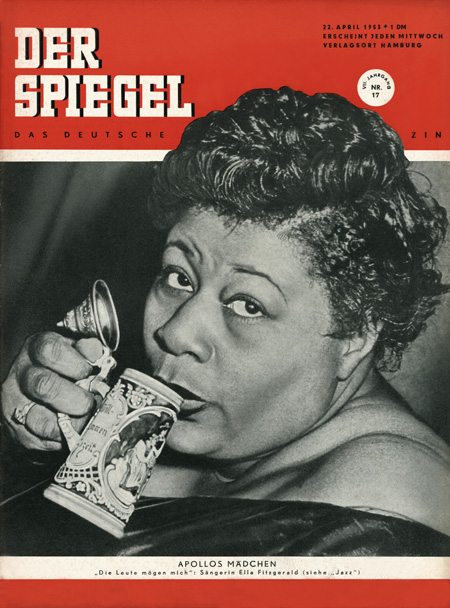
Singer Ella Fitzgerald (April 1953)
The Federal Republic's rapprochement with the USA in matters of foreign policy and security was accompanied by a cultural rapprochement: West Germany became "Americanized," just as it was "Americanizing"....
|
|
| 4.
|
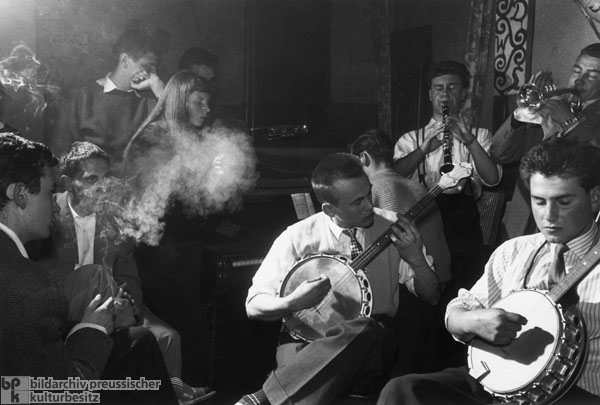
The Hamburg Gasworks Jazz Band Plays at “Captain’s Cabin” in Hamburg (1955)
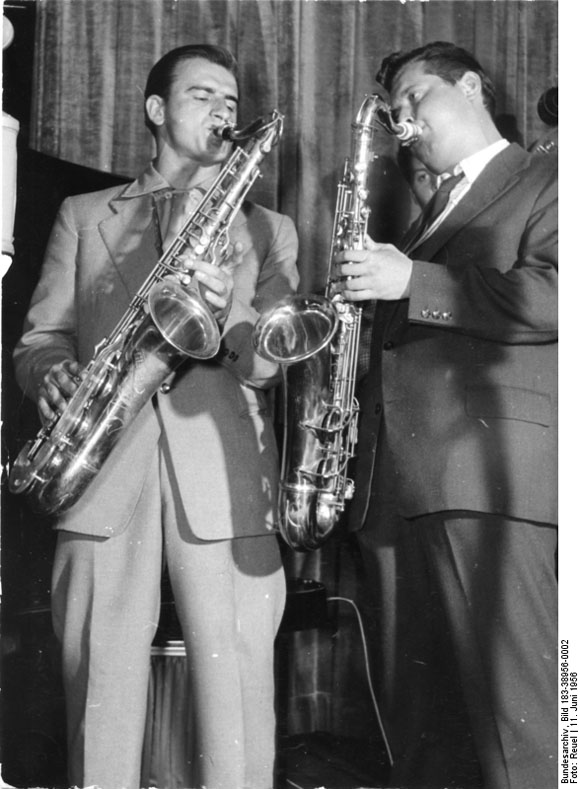
The big bands of the various state radio stations became one of the pillars of jazz in Germany after 1945, playing chiefly swing, dance and entertainment music. Alongside these, jazz clubs sprang....
|
|
| 5.
|
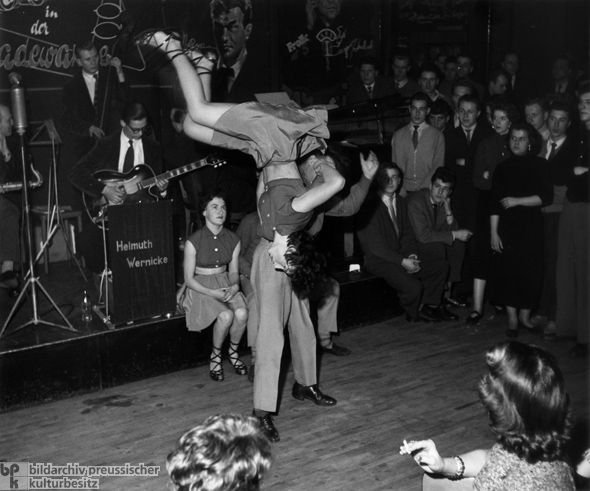
Rock 'n' Roll in a Berlin Dance Hall (1955)
Clothing, dance styles, and musical tastes followed American trends in the 1950s. This photograph shows a dance event at the "Badewanne" [“Bathtub”] on Nürnberger Straße in West Berlin (1955). That....
|
|
| 7.
|
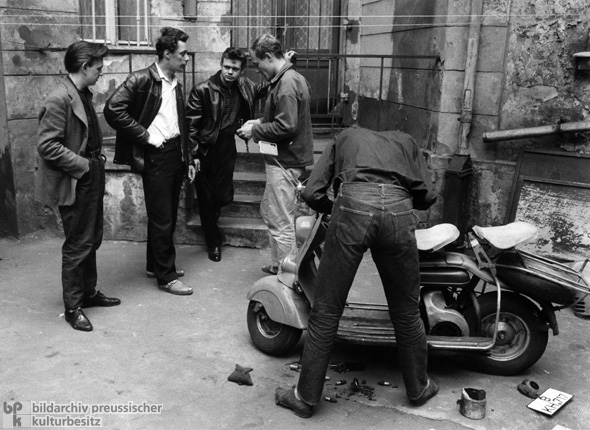
"Hooligans" in Berlin-Kreuzberg (1956)
During the 1950s, the image of the Halbstarke ["hooligan"] dominated debates about the new generation, which was regarded as nonconformist and rebellious. The hooligan role was filled mostly....
|
|
| 8.
|
Film Poster for "The Hooligans" ["Die Halbstarken"] (1956)
"The Hooligans" was one of the greatest commercial successes of postwar West German cinema. Its star, Horst Buchholz, was seen as Germany's answer to James Dean. The film dealt with juvenile criminality....
|
|